Collector, Purveyor, and Showman:
Lightnin’ Wells honored by documentary
One thousand songs. By all accounts, Lightnin’ Wells knows more than 1,000 songs by heart. Thigh slapping, heart thumping, crying, can’t-help but-grin-and-sing-along music. His bread-and-butter is the Piedmont blues but he also could write home to Mama about courting songs, whimsical whistling tunes, turn of the century ballads, old time come-to-Jesus numbers, and even a bawdy ditty or two. No lyric or chord sheet in front of him: they’re all meticulously organized in his head under that trademark shock of hair. Even with a conservative 3 minutes per song, that’s 50 or more hours. That is to say, Lightnin’ could play without ceasing for more than 2 days and nights and still not exhaust his repertoire.
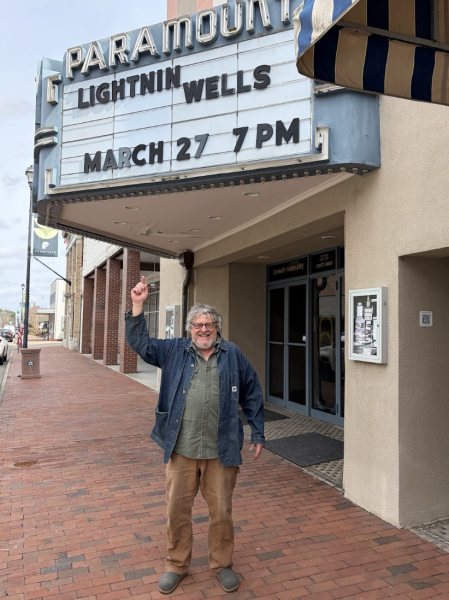
Lightnin’ is no stranger to eastern North Carolinian music aficionados, but a freshly produced documentary chronicles his musical journey and shares details only the most well informed insiders would know–the kind of folk who would meander down to his place in the Fountain countryside, out back, on a Friday night for impromptu picking sessions. The worldwide documentary premiere is scheduled at the Paramount Theatre in Farmville on March 27th, complete with live performances by Lightnin’ and special guests.
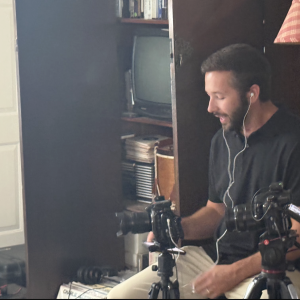
Denver Hollingsworth
East Carolina University graduate cinematographer Denver Hollingsworth already has two documentaries about North Carolina musicians under his belt that were aired on PBS-NC. “The Singing Senator,” released in 2024, highlights the career of long-serving NC state senator and country music singer-songwriter Charlie Albertson. “Voices from the Past: Jackie Butler and his Playmates” (2025) is about a Clinton, NC child band from the 1950s. Both programs may currently be seen on PBS NC stations.
“Working on this film has been like stepping into a living archive,” Hollingsworth says. “After spending hours with Lightnin’ and his peers, and going through decades of photos, recordings, and memories, I realized how much history he’s been carrying and preserving. Seeing it all come together has felt less like making a traditional documentary and more like helping preserve something deeply important. It has been an honor to play a small role in ensuring Lightnin’s legacy, and the Piedmont Blues tradition he’s devoted his life to, and I hope this project will be seen and heard by future generations.”
It has been a labor of love initiated on behalf of Lightnin’ by those who recognized the value of his contributions to music in North Carolina. While casual fans know his public performance persona, they may not realize the countless hours he has devoted to researching and excavating music, studying and assisting late-in-life performers before their distinctive styles were lost forever. Piedmont blues legends like Big Boy Henry and Algia Mae Hinton. Lightnin’ played alongside them and helped facilitate rejuvenated interest in their music. Lightnin’ produced Henry’s recording, “Mr. President,” a protest against social welfare cuts by President Ronald Reagan which was nominated for a W.C. Handy award, (now known as the Blues Music Awards).
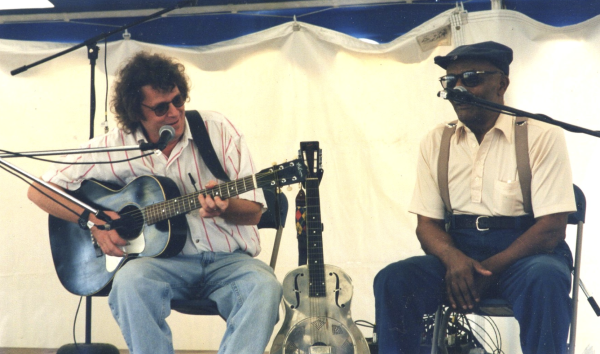
Lightnin’ & Big Boy Henry
• • •
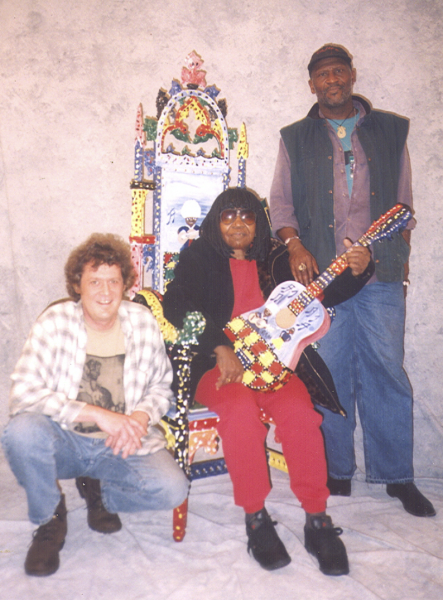
Lightnin’, Algia Me Hinton, Taj Mahal
“I worked with Algia Mae Hinton the most because she needed my help the most,” Lightnin’ says in the documentary. “She lived in Johnston County near Zebulon and she raised six kids by herself and worked out in the fields. I’d go over there and they’d play out in the yard or something. It was like social music.”
Algia Mae Hinton’s showstopper, Lightnin’ says, was that she buck-danced and played the guitar at the same time. Then she would put the guitar behind her head while buck dancing and playing. Algia Mae didn’t drive, so Lightnin’ drove her to gigs and took care of business. He was especially proud of being able to take her to Italy, where she performed a number of concerts.
“It’s very rare to meet people who learn directly from those folks who were brought up in those communities where this music flourished at one time,” says Wayne Martin in the documentary. A musician and music historian himself, Martin was Executive Director of the NC Arts Council for 34 years.Martin says that the connections Lightnin’ made were extremely important: “He cared about the musicians, was good friends with them, and assisted in trying to bring their music to a greater public visibility.”
“There are not many people who know the history of that music within the community that knew those people, that knew the stories associated with the music or the stories associated with the individual’s own lives,” Martin said. “And Lightnin’ knows that. Those folks are very rare and they need to be held up, in my opinion, as role models for how we approach the perpetuation of traditional music if we want it to continue to be a tradition.”
Alex Albright, who has hosted performances by Lightnin’ at R.A. Fountain General Store for many years says, “One thing that has happened over the years is seeing Lightnin’ develop a much broader audience of people that would never have been at the New Deli [former sandwich shop and music venue on Cotanche Street in Greenville] when I first met Lightnin’ in 1981. They come because of the variety that he presents, the enthusiasm, the encyclopedic knowledge. He’s become not just a purveyor of great music, but he is a showman.”
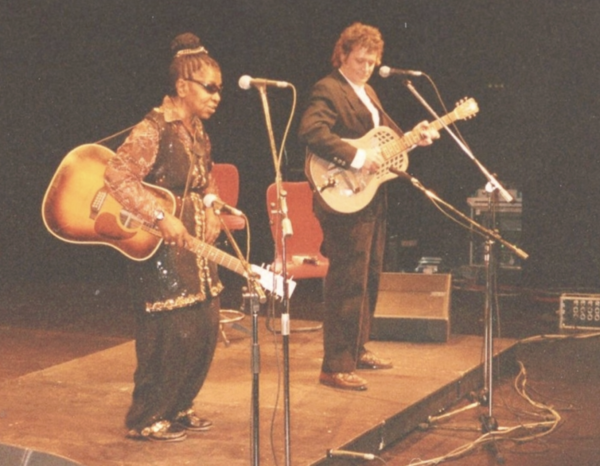
Algia Mae & Lightnin’
Atiba Berkley, president of the Piedmont Blues Preservation Society, says in the documentary, “People talk about appropriation and you see a white guy like Lightnin’ Wells and you’re like, ‘Oh, what can he tell anybody about the blues?’ But you can be a part of a culture by having your local connection. You grew up in a neighborhood, you have your familial connection that can make you part of a folk community. Lightnin’ has really capitalized on experience. His memory for stories and his ability as a storyteller about artists and about the legacy of Piedmont Blues in North Carolina, but even beyond. And in the African diaspora that blues comes from, in West Africa specifically, we call those people griots. He is a griot of blues and Piedmont blues. And so he has taken it upon himself as part of his purpose in life, I think, to share these stories, to preserve and share these songs and make sure that people can access them for a long time to come.”
A friend who played drums with Lightnin’ in downtown Greenville venues in their early years, Bob Aiken, says, “It will be a forgotten art one day. And if there’s anyone going to preserve it, Lightnin’ is the one that does it.”
Silas Albright and Lightnin’ recently released new podcasts discussing his early history as well as a Valentine’s Day edition with old fashioned love songs, available here.
The Lightnin’ Wells documentary premiere and concert event is March 27, 7pm at the Paramount Theatre in Farmville. Tickets are $25 for general admission, $35 for reserved seats, and $50 for V.I.P. (which includes reception)..
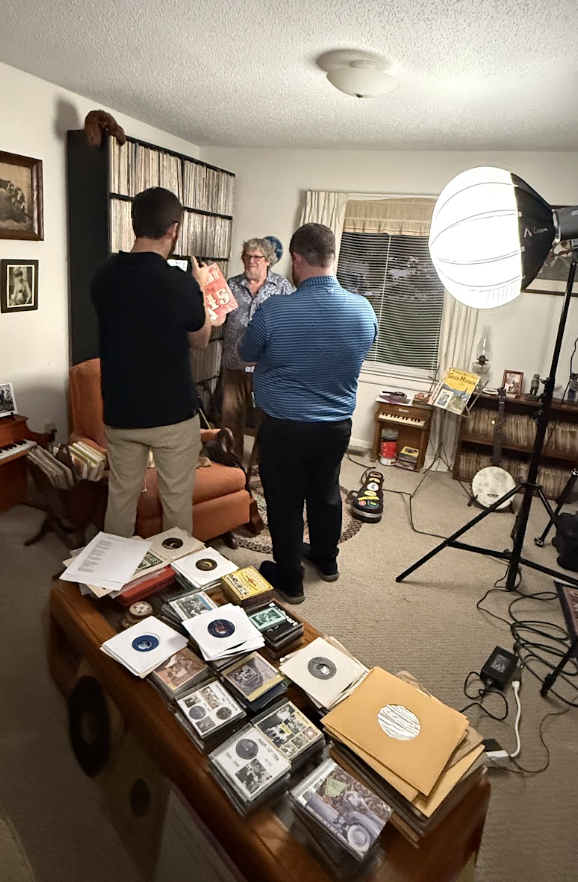
Filming the documentary Lightnin’ at his home
• • •
Originally published in the Greenville Daily Reflector February 28, 2026.
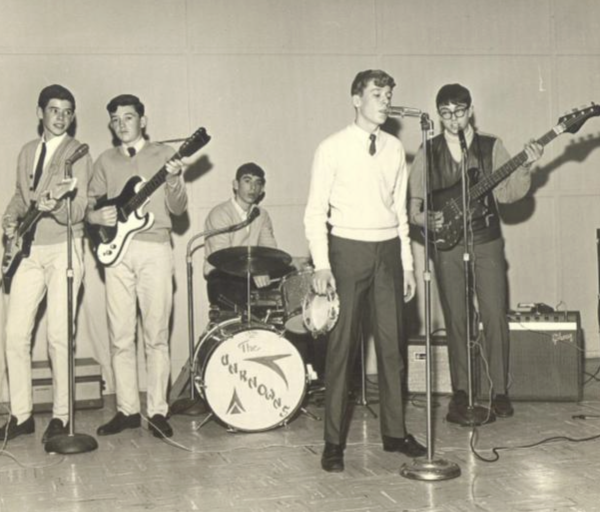
Lightnin’ at the mic, Goldsboro, 1965
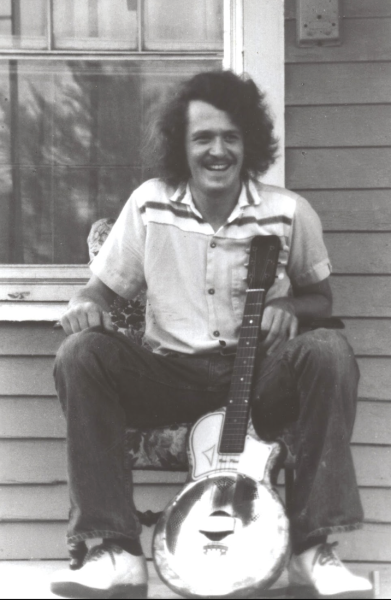
Greenville 1978
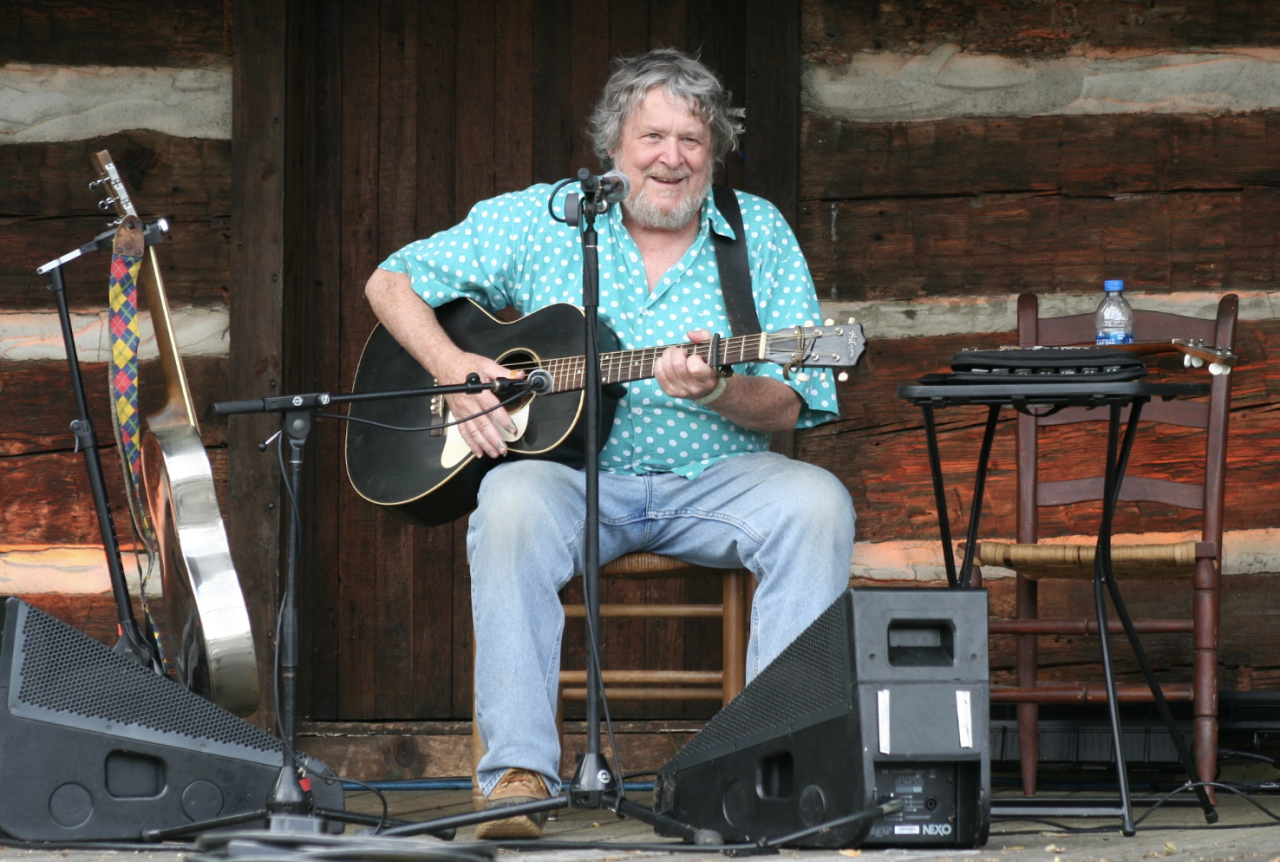
Cabin Stage at Merlefest, 2023